


[ Case Study ]
From the first published sequence of the 2026 Andes virus outbreak to a continuously updated assessment — in the days before wet-lab evidence could arrive.
[ 01 ]
After passengers on the MV Hondius were confirmed to be infected with a hantavirus (Andes virus), one of the immediate questions was whether the sequence in this outbreak contained mutations that could change the virus's behavior: for example, could it spread more effectively or has it adapted more readily to humans?
Once genomic data is released, Grove begins characterization and automatically updates the assessment as new sequences arrive.
[ 02 ]
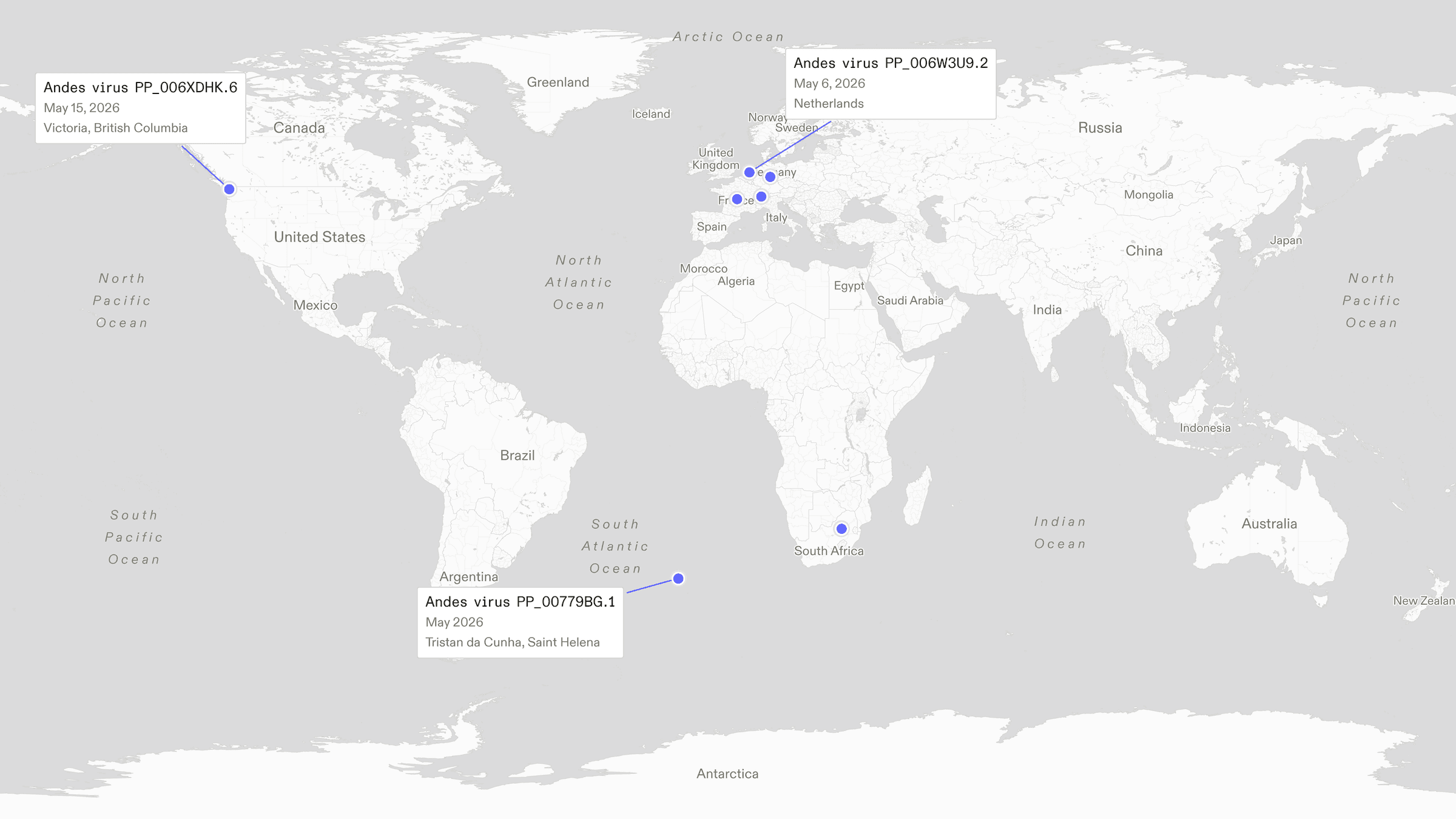
The first sequence was posted to Virological on May 8, 2026, several days after the first confirmation of Andes virus. Grove compared that sequence against previously observed variants of the same virus, and generated an evolutionary tree to organize the comparisons — a common first step in understanding a new threat.
[ 03 ]
Identify new mutations
From there, Grove identified mutations that distinguish the 2026 outbreak sequences from the closest variants we had seen before.
The tree tells us what changed. It does not tell us what those changes mean. Wet-lab assays and real-world observation are the gold standard to determine the effects of individual mutations. But those approaches can take weeks or longer, while response decisions often need to be made much earlier.
[ 04 ]
This is where AI methods can help. Grove then applied Cypress-1, a Valthos-developed protein language model that also integrates sample context, to score those mutations for their predicted effects on viral fitness (a factor in the new variant's ability to spread) and adaptation to humans.
[ 05 ]
Grove's analysis of the first sequences did not identify mutations likely to give the 2026 outbreak a fitness advantage over prior outbreaks or make the virus better adapted to humans.
[ 06 ]
As new sequences appeared across the world, Grove analyzed them, and looked for signs that the risk level had changed. The result was a continuously updated assessment of the outbreak rather than a one-time analysis.
[ 07 ]
When the first 2026 Bundibugyo ebolavirus sequences became available, Grove produced an initial characterization within five hours. Subsequent updates ran in approximately 10 minutes. As additional sequences were released, Grove automatically incorporated them, expanding the analysis to 820 outbreak sequences.